
In this post
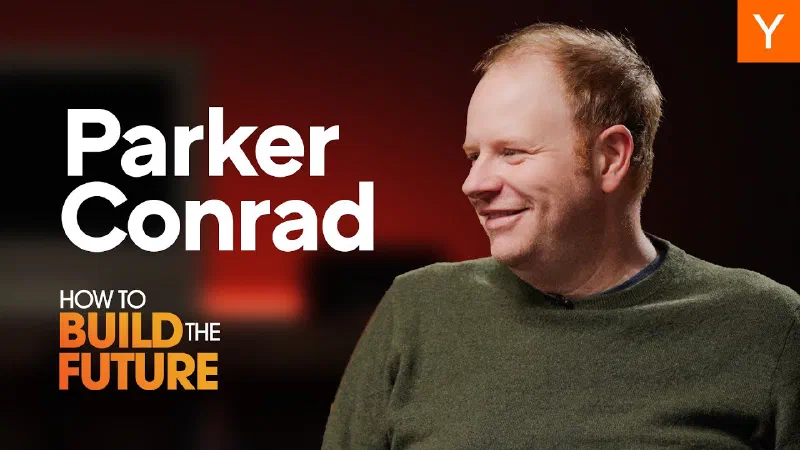
This post summarizes “How To Build The Future: Parker Conrad”, an episode of Y Combinator’s How to Build the Future series, published on the Y Combinator channel in January 2025. Host Garry Tan sits down with Parker Conrad, co-founder and CEO of Rippling, whom he introduces as the founder of a $13.5 billion company. Parker talks about his early years, the failures before Zenefits and Rippling, and how he sees software and AI in business.
Key Takeaways #
- Early Experiences: Parker’s journey began with a fascination for computers and technology, leading him to fix computers for friends and family.
- Startup Challenges: He faced numerous rejections and failures before finding success with Zenefits and later Rippling.
- AI’s Role: Parker expects AI to help 2,000-person companies run more like 200-person companies, and 200-person companies more like 20-person ones.
- Compound Software: Parker advocates for a new model of software that integrates multiple functions, rather than focusing on single solutions.
Early Days and Entrepreneurial Spirit #
Parker says he figured out computers early and made money in middle school and high school fixing computers for friends of his parents.
At Harvard he worked on the student newspaper, the Crimson, spent all his time on it and skipped class. The school didn’t like that, so he was kicked out, then came back and graduated. What he liked was taking on the administration and entrenched powerful interests, a feeling he later found again in startups, which usually take on a big incumbent.
The Startup Rollercoaster #
After a chemistry degree he took a job at Amgen in Los Angeles. He says progress was slow, and a college roommate who worked at Amazon wanted to start a company. Their first idea was a wiki for stock research, which never really took off. Parker describes seven years of slow grinding failure, rejection and pivots. They raised a $2.5 million seed round at a $7.5 million valuation off a pitch deck, then pitched about 70 investors in 2009 who all said no. The company was later renamed SigFig.
Parker says he came away cynical about fundraising: investor enthusiasm shifts every six to nine months, while building a company takes years. He thinks consumer businesses are often random, and that founders should focus on making the business so good investors can’t ignore it.
Finding Product-Market Fit #
Zenefits was the opposite of those years. Parker says every idea they tried worked, and the market pulled the product into existence. The insight was doing many administrative tasks in one system instead of by hand. Revenue went from about $200,000 when they left Y Combinator to roughly $1 million by the end of that year, then from $1 million to $20 million the next year, then from $20 million to $65 million the year after, against a plan of $100 million.
Parker says he was fired within a week of the end of that fiscal year. He describes top-of-funnel growth stalling after investors had priced in huge future growth, compliance issues surfacing, and investors getting nervous. He was forced out and David Sacks became CEO.
The Birth of Rippling #
Parker describes building the same company twice. With Rippling he wanted a compound software business: payroll, benefits and offer letters, but also shipping a new hire a laptop and setting up access to email, Salesforce and GitHub. He says the team spent about two years building, mostly engineers, with no operations or customer support, to avoid what he saw as Zenefits’ reliance on manual work.
Parker’s argument is that many deeper business problems can’t be solved by narrow point solutions, and that point SaaS companies can’t invest in cross-cutting R&D like analytics, approvals, permissions and workflow automation. He also says he is not sure it’s good advice for other founders, and that compound software could mean fewer, larger software businesses.
The Role of AI in Business #
Parker says AI’s real strength in B2B software is that it can read and ingest large amounts of information, more than that it can write. A CEO can’t see everything employees do, but AI can. He expects this to let large companies run more like small ones.
His example is a Rippling AI performance management feature that looks at an employee’s first 90 days of work product (pull requests, sales calls, support tickets) and signals whether the person is on a path to success or struggling, early enough to intervene. He also says AI SDRs mostly don’t work yet, and that AI will lead to more verticalized, tailored software.
The Future of Software Development #
Parker’s vision for Rippling is business software built on a shared data layer with abstracted platform capabilities, like a Lego system for building applications. He says point SaaS had a window when everything moved from on-prem to the cloud, but the markets got crowded and the problems it can solve are limited.
He is candid that the outcome is open. In his closing words, the jury is still out on which way of building software will win.