In this post
How can vertically align an element with Tailwind CSS by Flex?
Justify-Center and Items-Center #
flex: To use a flex-div as a container.h-screen: To size the container height to the viewport height.justify-center: To justify center (horizontal center).items-center: To align the items to the center (vertical center).
<div class="flex h-screen items-center justify-center">
  <h1>Title</h1>
</div>
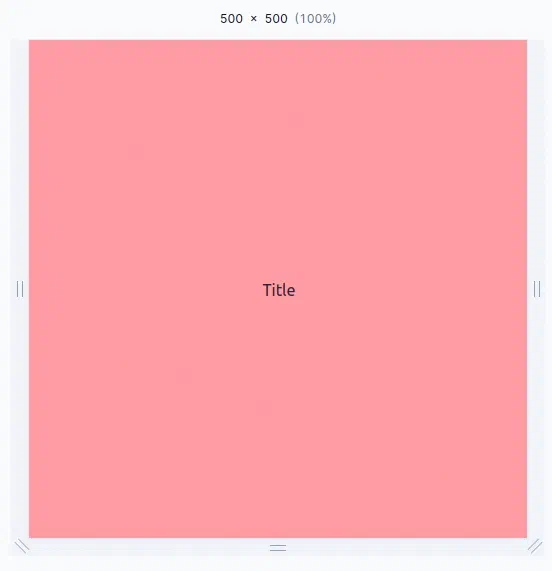
This is already pretty well documented in the Tailwind CSS docs.
The two utilities split the job by axis. justify-center is justify-content: center, which works along the flex direction, and items-center is align-items: center, which works across it. With the default flex-row, that means horizontal and vertical. If you add flex-col, the axes swap, and justify-center becomes the vertical one.
Another way to use Flex for to align items #
In this case need to set margin: auto to wrapper of children element.
<div class="flex h-screen">
  <div class="m-auto">
    <h1>Title</h1>
  </div>
</div>
This works because an auto margin in a flex container takes all the free space on its side. With m-auto, the child gets equal free space on all four sides, so it lands in the middle.
h-screen on phones #
h-screen is height: 100vh. On mobile browsers the address bar slides in and out, and 100vh can be taller than what is visible while the bar is showing, so your “centered” title sits a bit too low. Tailwind CSS v3.4 added h-dvh (height: 100dvh), which follows the viewport as the browser UI expands or contracts:
<div class="flex min-h-dvh items-center justify-center">
  <h1>Title</h1>
</div>
We used min-h-dvh here on purpose. With a fixed h-dvh and content taller than the screen, items-center pushes the overflow out of both ends of the box. In a 600px-tall window, a 900px child started 150px above the top of its container. With the container at the top of the page, that part can’t be scrolled into view. With min-h-dvh, the container grows to fit, and short content stays centered.
To keep the rest of the stylesheet maintainable, see How to have a clean CSS structure with RSCSS/ITCSS.
If you inherited a codebase where the team rolls custom layout hacks instead of using Tailwind’s built-in utilities, that’s a sign worth digging into. Our code quality evaluation guide helps non-technical founders spot these patterns before they compound.
For more Tailwind CSS techniques, see our guides on creating triangles in Tailwind and pure CSS triangles.